
Blogs

Why Amazon RDS for MySQL Runs Out of Storage—and How to Recover Safely
Imagine a production Amazon RDS for MySQL instance that has been running normally for months. Suddenly, application writes start failing. Background jobs stop processing, and the application team reports database connectivity issues. You check CloudWatch. CPU...

PostgreSQL 14 End of Life (Nov 2026): Is Your Upgrade Ready?
PostgreSQL 14 reaches community end of life on 12 November 2026. After this date, the PostgreSQL community will no longer provide regular bug fixes or security updates for PostgreSQL 14. The database will continue to run, but remaining on an unsupported version can...
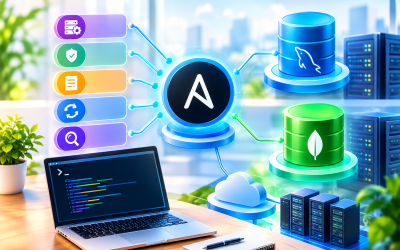
Ansible-Powered Database Automation: MySQL and MongoDB
Introduction As database environments grow, database teams spend more time performing repetitive operational tasks such as checking services, validating connectivity, collecting diagnostics, managing configurations, and verifying system health. When these tasks are...

MongoDB Replication Lag Is Rising: Is Your Oplog Window Shrinking?
When a MongoDB secondary starts falling behind, replication lag is usually the first metric we check. That makes sense. If a secondary is 10 minutes behind, we know there is a delay. If it is two hours behind, we know the situation needs attention. But there is...

AWS Managed Prometheus and Grafana: Building a Scalable Observability Stack
Introduction: Modern applications are becoming increasingly distributed. A single production application may consist of dozens or even hundreds of containers, Kubernetes workloads, microservices, databases, APIs, queues, and cloud services. CPU and memory dashboards...

Amazon RDS vs Self-Managed Databases: What Changes for a DBA?
For many years, database administrators have been responsible for almost everything around databases — from installing and configuring the operating system to managing storage, backups, replication, patching, monitoring, and performance. Amazon RDS for Databases...

PostgreSQL Extensions in Action
PostgreSQL already provides many features required for production database environments, including query planning, native partitioning, logging, and autovacuum. As workloads grow, however, some operational requirements need additional capabilities. Common examples...

MongoDB MVCC Internals: How WiredTiger Handles Concurrency
Modern MongoDB applications can have thousands of clients reading and modifying data concurrently. For a DBA, the important question is not simply how MongoDB stores documents, but how it allows these operations to run concurrently while maintaining consistency. A key...

Why Parallel VACUUM Changes the Vacuum Game in PostgreSQL 18
Vacuum is one of those PostgreSQL features that works quietly in the background until it doesn't. When autovacuum falls behind, DBAs can start seeing table bloat, growing indexes, stale planner statistics, increasing transaction ID age, and eventually serious...

PMM Query Analytics for MySQL and MongoDB Performance Optimization
Introduction Modern applications generate thousands or even millions of database queries every day. While infrastructure metrics such as CPU utilization, memory consumption, disk I/O, and network throughput provide valuable insights into server health, they rarely...
Let Us Help You Grow